

Edward Woodville, born around 1454–1458 at Grafton Regis in Northamptonshire, England, stands out as an emblematic figure of the twilight of the medieval chivalric era. The youngest son of Richard Woodville, 1st Earl Rivers, and Jacquetta of Luxembourg, he grew up in a family that embodied the meteoric social rise under the Yorkists. His elder sister Elizabeth secretly married King Edward IV in 1464, catapulting the Woodvilles to the very heart of royal power. This controversial union transformed the Woodvilles from minor nobility into pillars of the court, but also made them targets of the intrigues of the Wars of the Roses, the dynastic conflict that pitted the houses of York and Lancaster against each other from 1455 to 1487.
From childhood, Edward was immersed in a world of politics and war. The Woodvilles, originally allied with the Lancastrians, switched to the Yorkist side after Elizabeth’s marriage. Edward, the tenth child in a large family, received an aristocratic education: training in arms, horsemanship, and the codes of chivalry inspired by Arthurian romances and the crusades. Although details of his youth remain vague—the chronicles of the time focus on his elders—it is likely that he witnessed the tumultuous events of 1471, such as the battles of Barnet and Tewkesbury, where his brother Anthony was captured and then released. These clashes, which sealed Edward IV’s restoration, forged in Edward a keen sense of dynastic loyalty and a deep aversion to internal betrayal.
It was in 1472 that Edward’s destiny turned toward Brittany, marking the beginning of his patriotic commitment to that Celtic land. At around 18 years of age, he accompanied Anthony to Brittany in response to the appeal of Duke Francis II, who was threatened by a French invasion under Louis XI. Edward IV, eager to counter French expansionism and secure a continental ally, sent 1,000 English archers under their command. Though modest in scale, this expedition was a victory: the Anglo-Breton forces repelled French advances and forced a truce. For Edward, this first campaign was transformative. He discovered Brittany as a proud, independent nation defending its freedom against a voracious neighbor.
2. The Agreements of Châteaugiron
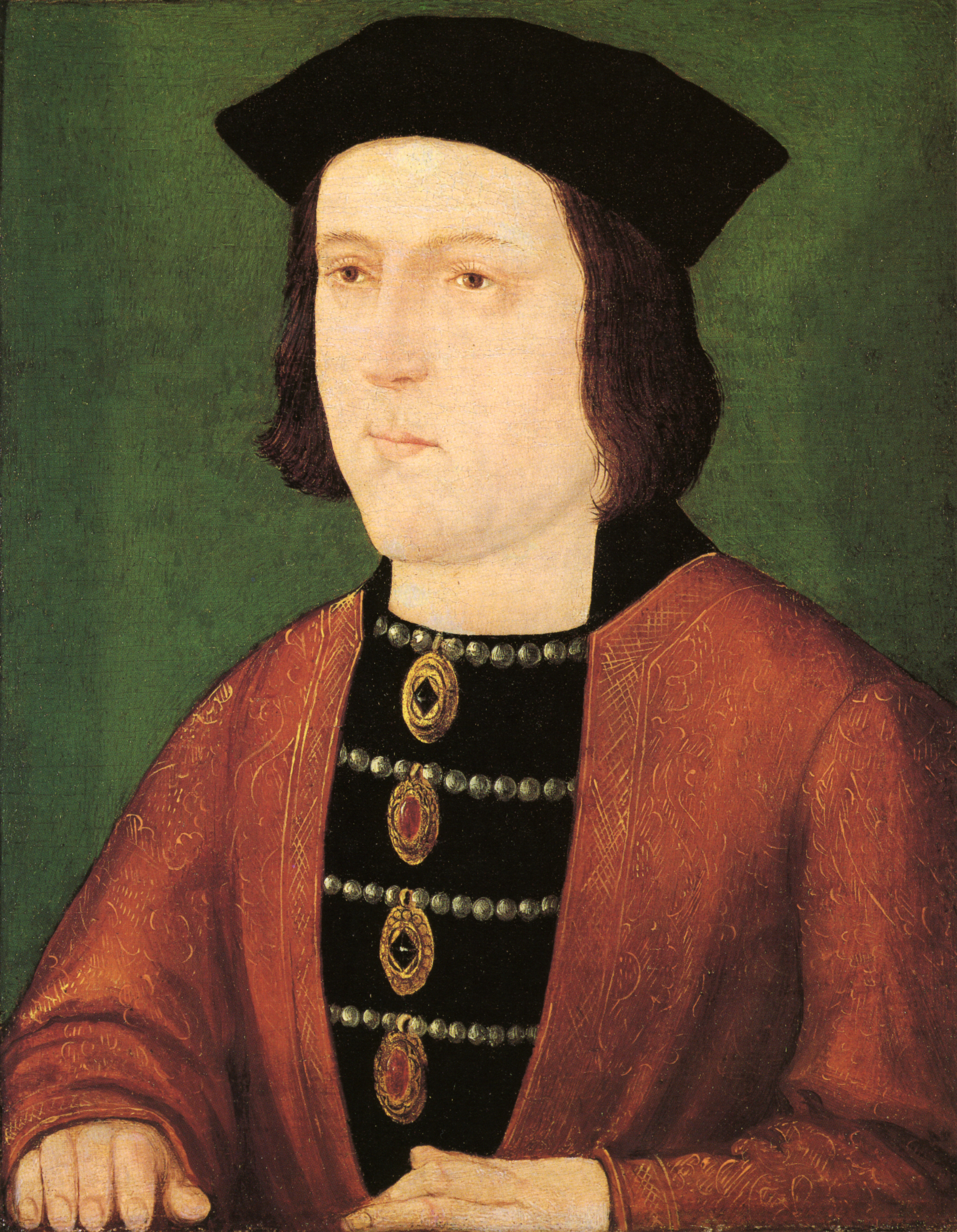
Edward IV
Louis XI and the dream of a France without great fiefsLouis XI never hid his objective: to transform feudal France into a centralized kingdom where no prince, duke, or count could challenge the crown. He had already succeeded: Normandy retaken in 1465–1468, Guyenne recovered upon the death of his brother Charles in 1472, Burgundy threatened by war against Charles the Bold. The biggest prize remained: Brittany—a duchy with its own fleet, army, language, and laws, whose duke considered himself the equal of kings.Why 1471–1472 was the chosen year to strikeSeveral factors convinced Louis XI that the duchy was ripe for the taking: Francis II was at his lowest—health ruined, crippled by gout, chronically depressed, with no legitimate son. His two daughters, Anne (born 1477) and Isabeau (1478), were not even born in 1472; the succession was wide open to interpretation.Internal divisions: half the great lords (Rieux, Rohan, Laval, Coëtivy) hated the duke’s favorites and had already called for French help in 1470.
Garrisons already in place: since 1471, French companies occupied Pouancé, La Guerche, Ancenis, and Marcillé-Robert. Louis XI only had to advance these outposts to strangle the duchy.
Charles the Bold was busy in Alsace and Lorraine; Edward IV was still consolidating power after 1471. For Louis XI, it was the perfect moment—no external ally could intervene in time.
The plan was ready: gradual occupation, a leonine treaty, guardianship over the heiresses, then outright annexation.
The Agreements of Châteaugiron: the treaty that forced the Spider King to back down (11 September 1472)
On 11 September 1472, in the great hall of the château of Châteaugiron—one of Francis II’s favorite residences—the decisive turning point took place. Francis II, Duke of Brittany, and Anthony Woodville, Earl Rivers, plenipotentiary of Edward IV, signed a defensive alliance treaty:
- Mutual assistance if either party were attacked by France.
- Military coordination: if one declared war on Louis XI, the others were obliged to provide active help.
- Secret clause: Edward IV promised to land in France with a large army within two years; in exchange, Brittany would open its ports and supply troops and provisions.
- Duration: two years, renewable.
The effect was immediate: Louis XI realized he risked war on three fronts—Brittany, England, and Burgundy. He ordered the suspension of all offensive operations and the gradual withdrawal of royal garrisons from Breton strongholds.
Consequences and the end of the alliance (1473–1475)
The 1,000 English archers remained for a few more months as a guarantee force before returning home in early 1473. Louis XI accepted a de facto truce and turned his attention to Burgundy. The alliance lasted until 1475: Edward IV did indeed land with 15,000 men in July 1475, but Louis XI bought English peace with the Treaty of Picquigny (29 August 1475), and the Châteaugiron alliance came to an end. Brittany gained sixteen years of breathing space—until Francis II’s death in 1488 and the battle of Saint-Aubin-du-Cormier.
3. The Anglo-Breton Conflict of 1472

Francis II, Duke of Brittany
In the autumn of 1471, Louis XI was convinced the Duchy of Brittany was within his grasp. Francis II, duke since 1458, was physically and morally exhausted: gout attacks, chronic depression, no legitimate son—only two young daughters (Anne and Isabeau). The Breton nobility was deeply divided; several great lords (Marshal de Rieux, the Prince of Orange, Gilles de Bretagne) had already called for French help during the revolts of 1468–1470. Louis XI had used these troubles to install royal garrisons in key border strongholds: Pouancé, La Guerche-de-Bretagne, Marcillé-Robert, and above all Ancenis on the Loire. By holding these castles, he controlled the main invasion routes and could cut the duchy in two. His plan was clear: advance slowly, isolate Nantes and Rennes, force Francis II to accept a protectorate treaty or abdicate. Annexation, which he had been preparing for years, seemed imminent.
The Woodville brothers’ expedition: 1,000 archers to save a duchy
Francis II had no choice but to turn to the traditional English alliance. He sent ambassadors to London requesting 6,000 archers immediately. Edward IV, restored to his throne for barely a year and already dreaming of reconquering lost continental possessions, seized the opportunity. Helping Brittany meant opening a second front against Louis XI and securing naval bases for his own planned invasion in 1475. He chose as commander Anthony Woodville, Earl Rivers—his cultured, poetic, and experienced brother-in-law. With him went the youngest of the family, Edward, aged 17 or 18: this was his first real military campaign.Anthony landed in April or May 1472 with a symbolic escort of about thirty archers and a few gentlemen. He was received lavishly in Nantes and then Rennes. Negotiations were swift: Francis II promised ports, supplies, and auxiliary troops; Anthony obtained from London the dispatch of the expeditionary force. Over the summer, roughly 1,000 professional archers—equipped with the Welsh longbow and wearing the white and murrey livery of the House of York—crossed the Channel. Edward Woodville took an active part in their landing, quartering, and distribution among the Breton garrisons. These men were not mere mercenaries: they were paid directly by the English Crown and represented the elite of Edward IV’s ordinance companies.
A war without battles, but won in advance
There would be no spectacular siege or decisive clash in 1472. The intervention was purely deterrent. Anglo-Breton columns—mixing English archers and Breton knights—patrolled the eastern border, held the roads, and displayed banners with the red cross and Yorkist standards. The isolated and outnumbered French captains in their castles immediately understood the situation: an open attack would trigger a war they could not win at that moment. Louis XI, already having to watch Charles the Bold in Picardy and Lorraine, lacked the means to open a third front. As early as the summer, he ordered the suspension of offensive operations.4.
The Legacy of Edward Woodville

Coat of arms of Edward Woodville
For the young Edward Woodville, those months spent in Brittany were a profound revelation. He forged lasting friendships with Breton knights, attended ducal feasts, and received the accolade from Francis II.
Back in England, Edward distinguished himself in tournaments and royal ceremonies. Knighted of the Bath in 1475 at the investiture of Prince Edward, he took part in 1478 in a magnificent tournament for the marriage of the young Richard, Duke of York, to Anne Mowbray. His horses caparisoned in gold and velvet testified to royal favor. In 1480 he received lucrative lands, including the port of Portsmouth and Porchester Castle, strengthening his status as an influential lord. In 1482 he joined the Scottish expedition led by Richard, Duke of Gloucester (the future Richard III), taking part in the siege of Berwick and earning the rank of knight banneret for his bravery. But 1483 brought chaos. Upon Edward IV’s death, Richard orchestrated a coup, arresting Anthony and executing other Woodvilles. Edward, appointed admiral of a fleet against French corsairs, fled to Brittany with two ships and part of the royal treasure, joining Henry Tudor in exile. Francis II welcomed him, granted him a pension, and Edward resisted Richard III’s extradition demands. This period of exile deepened his attachment to Brittany, seen as a bastion of freedom against tyranny.
In 1485, Edward followed Henry Tudor to England. At Bosworth, he commanded the Tudor vanguard—composed of Breton mercenaries and others—contributing to the victory that founded the Tudor dynasty. Rewarded by Henry VII, he became captain of the Isle of Wight, governor of Portsmouth, and a Knight of the Garter. Yet adventure called him elsewhere. In 1486 he went to Spain, joining the Catholic Monarchs in their Reconquista against the Moors. At the siege of Loja he led a heroic assault, losing his front teeth but earning the sovereigns’ admiration. Back in 1487, he crushed rebels at Stoke. But in 1488, ignoring Henry VII’s orders, he raised a force to defend Brittany against Charles VIII. At Saint-Aubin-du-Cormier, he died a hero, refusing surrender. Edward Woodville, who left no descendants, embodied the wandering knight: loyal, daring, and devoted to an adopted homeland.
Olier Kerdrel
Recevez notre newsletter par e-mail !
